

 NewShop at Needed ↗
Decoded
Creatine for women: what it does beyond the gym
For most healthy women, yes, creatine is worth considering. It is one of the most studied supplements there is, and 3 to 5 g of creatine monohydrate a day supports strength and power when you also lift. The brain research is early. It won't make you bulky, and any early water weight is small.

Links marked ↗ go to other shops. We may earn a commission. It never changes our take.
The short answer
For most healthy women, yes, creatine is worth considering. It is one of the most studied supplements there is, and 3 to 5 g of creatine monohydrate a day supports strength and power when you also lift. The brain research is early. It won't make you bulky, and any early water weight is small.
Updated November 21, 2026.
What is creatine, in plain words?
Creatine is a compound your liver and kidneys make from amino acids, and you also get some from meat and fish. Your muscles store it and use it for short, hard efforts: the last two reps, the sprint up the stairs, the heavy box you swear you can carry alone.
A supplement tops up those stores. The International Society of Sports Nutrition notes that a pound of uncooked beef or salmon has only about 1 to 2 g, which is why people who want more usually take a powder (ISSN position stand, 2017).
The feed calls it new. It isn't. What's new is who's buying it. A Stacker analysis of Amazon data found "creatine for women" pulled about 174,000 monthly searches on Amazon in the year to August 2026, and the creatine subcategory grew 90% in 12 months (Stacker via KEYT, 2026).
Should women take creatine?
If you strength train, or want to start, it's one of the few supplements with real research behind it. A 2021 review in Nutrients on creatine across a woman's lifespan reported that women have 70 to 80% lower natural creatine stores than men and tend to eat less of it. The authors found creatine appears effective for strength and exercise performance in women before menopause, and in women after menopause it may support muscle size and function, with favorable effects on bone when paired with resistance training (Smith-Ryan et al., Nutrients, 2021).
The catch: the gains come from creatine plus training. A scoop on its own, with no lifting, isn't the plan.
What does the research actually say?
Strength and muscle: strong evidence
This is the part nobody serious argues about. The ISSN position stand calls creatine monohydrate the most effective nutritional supplement available for high-intensity exercise capacity and lean mass during training, and says 3 to 5 g a day keeps muscle stores topped up once they're full (ISSN, 2017).
Brain and memory: early, but interesting
A 2024 meta-analysis in Frontiers in Nutrition pooled 16 randomized trials with 492 adults. Creatine showed a small positive effect on memory, but no significant effect on overall cognition or executive function. Subgroup results looked better in women, though only a handful of studies fed into that (Xu et al., Frontiers in Nutrition, 2024).
Our read: interesting enough to keep watching, not strong enough to buy creatine for your brain alone.
Menopause and bone: promising, not settled
The 2021 Nutrients review flags menopause as a stage where creatine may matter more, but the bone findings come with resistance training, and several of the trials used higher doses than the everyday 3 to 5 g (Smith-Ryan et al., 2021).
What does the feed get wrong?
- "It'll make you bulky." Creatine doesn't build muscle by itself. Training does. Creatine helps you get a little more out of each session.
- "It makes you puffy." A 2021 review of common creatine myths found water retention mostly shows up in the first several days, especially with high loading doses of 20 g a day, and training studies of 5 to 10 weeks didn't show increases in total body water (Antonio et al., JISSN, 2021). If the scale jumps a pound in week one, that's why.
- "It causes hair loss." That fear traces back to one small study in college-aged male rugby players that measured a hormone, not hair. The same review notes it has never been replicated and the hormone stayed within normal limits (Antonio et al., 2021).
- "You need to load it." You don't. Loading fills your muscles in about a week. A steady 3 to 5 g a day gets you there in about three to four weeks, minus the bloat (ISSN, 2017).
If you still want to try it, what should you buy?
Buy plain creatine monohydrate, 3 to 5 g a day, any time of day. Consistency beats timing. Mix it into water, coffee or a smoothie and give it about a month before you judge it. Shop the rest of our wellness edit if you're building out the shelf.
We may earn a commission. It never changes our take.
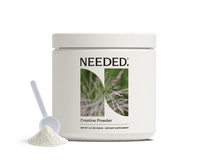
Needed Women's Creatine, $24.99
The simple one. 5 g of creatine monohydrate per serving and NSF Certified for Sport, which means a third party checked what's in the tub. Unflavored, so it disappears into whatever you're drinking.
The catch: "for women" is the label, not the chemistry. It's the same creatine monohydrate that's in any good tub.
Skip it if: you already own plain monohydrate. Finish that first.
Ritual Creatine Greens, $65.91
For the person who wants one scoop instead of two. Ritual lists 5 g of creatine monohydrate per serving plus a greens blend with spirulina and chlorella. Ritual's site was running a Black Friday offer of 40% off new subscriptions on November 21.
The catch: you pay almost three times as much as plain creatine for the greens. If you liked our greens powder breakdown, you know where we land on greens.
Skip it if: you only want the creatine.
Pair it with protein
Creatine helps you train. Protein helps you recover from the training. If you struggle to eat enough protein, a powder is the easy fix.
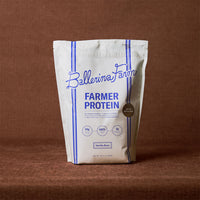
Ballerina Farm Farmer Protein Powder, $69.99. 24 g of grass-fed whey protein per serving, plus bovine colostrum and collagen peptides. The catch: pricey per serving, and not for anyone avoiding dairy.
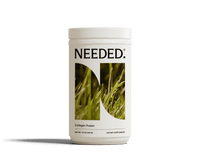
Needed Women's Collagen Protein, $49.99. 15 g of hydrolyzed bovine collagen per serving, neutral flavor. The catch: collagen is missing an essential amino acid, so count it as a top-up, not your main protein. Our peptides and collagen explainer covers what it can and can't do for skin.
These statements have not been evaluated by the Food and Drug Administration. This product is not intended to diagnose, treat, cure, or prevent any disease.
Who should skip creatine?
- Anyone with kidney disease or reduced kidney function. Talk to your doctor first, because creatine raises creatinine, the marker doctors use to check your kidneys, and can muddy that lab result.
- If you're pregnant, breastfeeding or trying to conceive, talk to your doctor or pharmacist first. The research in pregnancy is still early.
- If you take prescription medication, especially anything that affects your kidneys, ask your pharmacist before adding it.
- Teens should check with a doctor before starting.
FAQ
Should women take creatine?
Healthy women who strength train are good candidates. A 2021 review found creatine appears effective for strength and exercise performance in women, and women start with lower natural stores than men. It works best with regular resistance training. If you have kidney issues, are pregnant or take medication, talk to your doctor first.
Does creatine make women gain weight?
You may see a pound or so on the scale in the first week, mostly water pulled into muscle, especially if you load. Longer training studies didn't show lasting increases in total body water. It doesn't add fat. Over months, any change comes from muscle you build by training.
How much creatine should a woman take a day?
3 to 5 g of creatine monohydrate a day is the dose most research uses to keep muscle stores full. You can skip the loading phase; a steady daily dose gets you to full stores in about three to four weeks. Take it whenever you'll remember.
Is creatine good for women over 40?
It may be especially useful. Research on women after menopause suggests creatine may support muscle size and function, and bone when paired with resistance training. The studies are promising but small, and some used higher doses. Ask your doctor if you have kidney concerns or take medication.
Do creatine gummies work?
They can, if each serving actually contains 3 to 5 g of creatine. Check the label: some need several pieces to reach that dose, which costs more per gram. A plain powder with third-party testing, like an NSF Certified for Sport product, is the simpler bet.
Sources
- Kreider et al., International Society of Sports Nutrition position stand: safety and efficacy of creatine supplementation in exercise, sport, and medicine, Journal of the International Society of Sports Nutrition, 2017. PMC5469049
- Smith-Ryan et al., Creatine Supplementation in Women's Health: A Lifespan Perspective, Nutrients, 2021. PMC7998865
- Antonio et al., Common questions and misconceptions about creatine supplementation, Journal of the International Society of Sports Nutrition, 2021. PMC7871530
- Xu et al., The effects of creatine supplementation on cognitive function in adults: a systematic review and meta-analysis, Frontiers in Nutrition, 2024. Frontiers
- Stacker, Women are fueling creatine's biggest year in 3 decades, according to Amazon data, 2026. KEYT
Updated November 21, 2026. Prices and availability checked on this date.
Shop this story · 4
Links marked ↗ open the brand's site. We may earn a commission. It never changes our take.
Pass it on
Decoded · 4 picks
Shop this story
NewShop at Needed ↗

 NewShop at Ballerina Farm ↗
Ballerina Farm
Farmer Protein Powder
"The viral farm-girl protein. Good powder, influencer price."
$69.99
 Shop at Needed ↗
Needed
Women's Collagen Protein
"Unflavored collagen that disappears into your coffee. No weird aftertaste."
$49.99
We may earn a commission. It never changes our take.
Keep reading
All of Glow Tested
Is the Canopy humidifier worth it? Yes at $159 if your skin feels tight every winter and you'll clean it, no if your air is already humid
The Canopy Humidifier for Skin Hydration 2.0 is worth it if the heat runs all night and you wake up...

Is the Oura Ring worth it? Yes at $499 if you'll open the app every morning, no if you just want to sleep better
The Oura Ring 5 in Deep Rose is $499 on our page today, and it is worth it for one...

SomniFix vs Hostage Tape: SomniFix for most first-timers, Hostage if you have a beard
For most people, buy SomniFix Mouth Strips at $25.99 for a 1 pack on our page today. Each strip has...