


 Founders' BatchOurs
Glow Therapy
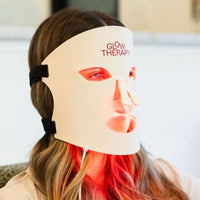
GlowMax Pro LED Mask
"Ten minutes, three to four nights a week. That's the whole deal."
$229$479
Versus
Of the three, red light therapy has the most research for skin quality over time, though results are subtle and need months of consistent use. Microcurrent gives a short-lived toned look with thinner evidence. Gua sha moves fluid for a temporary de-puff. Pick the one you'll actually do three to five times a week.
Products tagged Ours are ours. Links marked ↗ go to other shops. We may earn a commission. It never changes our take.
Nothing on this page lifts like a facelift, and anyone who says otherwise is selling something. What these three tools can do is change how your face looks in different ways and on different timelines:
Gua sha works on fluid. Microcurrent works on tone. Red light works on skin quality. Different jobs, which is why "which is best" is a slightly wrong question.
How it works: LED devices shine specific wavelengths of light at your skin. Red light (around 630nm) and near-infrared (around 850nm) are the ones studied for signs of aging. Blue light is the color studied for blemish-prone skin.
What the evidence says: The American Academy of Dermatology says red light LED devices "can produce subtle to noticeable results" on fine lines, redness and loose skin, calls the evidence encouraging but not conclusive, and notes that dermatologists' in-office light is more powerful than at-home devices (AAD). One frequently cited controlled trial of 136 volunteers found red and near-infrared light improved skin roughness and ultrasound-measured collagen density compared with controls (Wunsch & Matuschka, 2014). That study used professional light panels, not a mask, so read it as proof of concept rather than a promise.
The catch: It's the gym, not a facial. The AAD puts it plainly: "This is not a one-and-done treatment." Skip weeks and you lose ground.
Time cost: About 10 minutes, three to five times a week, ongoing. Hands-free, so it stacks with a podcast or doomscrolling.
Skip it if: you have a light-sensitive condition or take light-sensitizing medication (ask your dermatologist first), or you know you won't keep it up past January.
GlowMax is our own mask: eight light modes, including red, near-infrared and blue, in one device, $229. We built it for the 10-minute version of this ritual, not the 45-minute one.
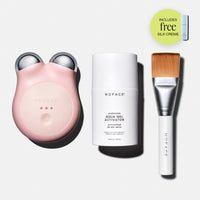
How it works: A handheld device sends a low-level electrical current through the skin, usually over a conductive gel, while you glide it along facial muscles in set patterns.
What the evidence says: Thinner than for LED. A 2023 literature review on microcurrent for static facial wrinkles concluded "there is no consensus on the effectiveness" and called for more studies (Research, Society and Development, 2023). Plenty of people swear by the temporary toned look before a big day, and that's a legitimate reason to own one. Just don't expect it to change your skin long term.
The catch: The gel. You need a generous layer every session, and it's an ongoing cost. Results fade, so it's a daily-ish habit if you want them daily-ish.
Time cost: About 5 to 20 minutes depending on the device, most days for the first couple of months, then maintenance.
Skip it if: you have a pacemaker or other implanted electrical device, are pregnant, or have epilepsy. Check the device's own warnings too. And skip it if you hate a hands-on ritual: this one needs your full attention and both hands.
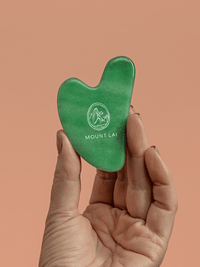
How it works: A smooth, flat stone or steel tool glided over oiled skin with light pressure, usually outward and downward toward the lymph nodes in your neck.
What the evidence says: Modest and specific. The famous "4x circulation" stat comes from a small 2007 study of firm-pressure gua sha on the back, with no control group, which isn't facial gua sha at all (Dermatology Times). The best facial-specific study we found is a 2025 randomized trial of 34 women doing 10-minute sessions, five times a week, for eight weeks. Both gua sha and a facial roller produced measurable but small changes in facial contour, which Dermatology Times calls "a modest, likely fluid- and tone-mediated effect" (J Cosmet Dermatol, 2025, via Dermatology Times).
Translation: it moves fluid. That's genuinely useful on a puffy Monday. It does not sculpt bone, melt fat or "detox" anything.
The catch: Press too hard and you can bruise or break small capillaries, especially with rosacea or thin skin. If you've had recent filler or neuromodulator injections, ask your injector before pressing on those areas.
Time cost: Five minutes, whenever you want. Best in the morning.
Skip it if: you have active breakouts or irritation on the area (you'll just spread it around), or you want a long-term change in skin quality.
Want the fancy one?
Or the $10 version that's surprisingly pleasant:
| Red light (LED) | Microcurrent | Gua sha | |
|---|---|---|---|
| Main job | Skin quality over time | Temporary toned look | Temporary de-puff |
| Evidence | Encouraging, not conclusive | Thin, mixed | Small studies, fluid effect |
| How fast | Weeks to months | Same day | Same morning |
| How long it lasts | Builds with consistency | Hours to a day or so | Until gravity wins again |
| Time | ~10 min, 3 to 5x/week | ~5 to 20 min, most days | ~5 min, anytime |
| Hands-free? | Yes | No | No |
| Ongoing cost | None | Conductive gel | Facial oil |
| Price in our edit | $229 (GlowMax) | $175 to $395 | $10 to $69 |
Choose red light if you want gradual changes in how your skin looks and you'll realistically do 10 minutes most nights. The hands-free part is what makes it stick for most people.
Choose microcurrent if you have events, love a hands-on ritual, and you're fine with results that need topping up.
Choose gua sha if your main complaint is morning puffiness, you want to spend under $40, or you just like five minutes of quiet with a cold stone.
Choose two if you want. Gua sha in the morning for puffiness, LED at night for the long game is a combo that doesn't fight itself. Just add one at a time so you know what's doing what.
We may earn a commission from some links. It never changes our take. GlowMax is our own product, and we've tried to hold it to the same standard as everything else on this page.
Shop this story · 7
Links marked ↗ open the brand's site. We may earn a commission. It never changes our take.
Pass it on
Versus · 7 picks
Founders' BatchOurs"Ten minutes, three to four nights a week. That's the whole deal."
 BestsellerShop at NuFACE ↗
"The pre-event toning ritual, if you'll keep up with the gel."
 Shop at Amazon ↗
"The gel that makes microcurrent actually work. Budget for refills."
 BestsellerShop at Amazon ↗
"Five minutes, a cold stone, and a less puffy Monday."
 Shop at Amazon ↗
"Gua sha that stays cold and won't chip in your bag."
 BestsellerShop at Amazon ↗
 NewShop at Kitsch ↗
We may earn a commission. It never changes our take.
FAQ
None of them gives a surgical-style lift. Red light has the most evidence for gradual changes in skin quality. Microcurrent and gua sha give temporary toned or de-puffed looks. Your best pick is the one you'll use consistently.
Many people do, on the same day or alternating days. Follow each device's directions, start one at a time so you know what's working, and stop if your skin gets irritated.
Think months, not days. The American Academy of Dermatology describes results as subtle to noticeable and stresses ongoing treatment. For GlowMax, that's 10 minutes, three to five times a week.
Gentle facial gua sha is low risk for most people. Too much pressure can cause bruising or broken capillaries, especially if you have rosacea. If you've had recent fillers or neuromodulators, ask your injector first.
Per the AAD, check with a dermatologist first if you have a light-sensitive condition like lupus, take light-sensitizing medication, or have a deeper skin tone, which can be more prone to dark spots from visible light.
Your bag is giving minimalist.
Start with what's bugging you, or let the quiz do the thinking.
The stuff you loved that ships from other brands. Tap to shop it there.
We may earn a commission on these. It never changes our take.