

 Founders' BatchOurs
Glow Therapy
GlowMax Pro LED Mask
"Ten minutes, three to four nights a week. That's the whole deal."
$229Similar masks $479
Decoded
Yes, blue light can help mild to moderate breakouts, as an add-on. A 2025 JAMA Dermatology review of six LED studies found red and blue light improved breakouts by about 45% versus sham or no light, usually after one to three months. It won't clear deep cysts or scarring, and it doesn't replace your derm.

Products tagged Ours are ours. Links marked ↗ go to other shops. We may earn a commission. It never changes our take.
Yes, blue light can help mild to moderate breakouts, as an add-on. A 2025 JAMA Dermatology review of six LED studies found red and blue light improved breakouts by about 45% versus sham or no light, usually after one to three months. It won't clear deep cysts or scarring, and it doesn't replace your derm.
Updated November 25, 2026.
Blue light therapy means shining visible blue light (the same color family as a clear sky, not UV) on your skin for a set number of minutes, a few times a week. At home that usually means an LED mask or a handheld wand. In a derm office it can mean a bigger panel, or photodynamic therapy, where a light-activated solution goes on first and the light switches it on.
The idea behind it is simple. The bacteria tied to breakouts make compounds that react to blue light, and that reaction stresses the bacteria. Red light is the other color you'll see on every mask. It reaches a little deeper and is mostly studied for calmer-looking skin and lines + lift. That's why so many studies, and so many masks, pair the two.
If you're here because your skin is breaking out after starting something new, read our purging vs breakout guide first. Light won't fix a reaction to a product you should stop using.
Modestly, yes, for the right kind of breakout. Here's what the research actually measured.
Put together: blue light is a reasonable extra for red, bumpy, mild to moderate breakouts, especially if your skin doesn't love benzoyl peroxide or acids. It is slow, and it is not a stand-in for a prescription when breakouts are deep, painful or scarring.
Use it like the gym: short sessions, often, for months. Most people who quit before week eight never find out if it was working.
Shopping for a mask? Our LED face mask buying guide covers what to look for, and our LED mask explainer covers what light can and can't do for lines.
We may earn a commission. It never changes our take.
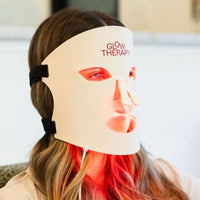
Our own mask, so read this with that in mind. GlowMax has eight light modes, including blue, the color studied for breakout-prone skin, plus red and near-infrared. Ten minutes, a few nights a week, and you can scroll while you do it.
The catch: it's slow, and it's a habit. If it lives in a drawer, it does nothing.
Skip it if: you're pregnant, light-sensitive, on medication that makes you sensitive to light, or won't use it three times a week.
Light is the slow part. These are the fast, cheap parts of a breakout ritual that pair well with it.
COSRX Low pH Good Morning Gel Cleanser, $9.31. A gentle gel wash with tea tree oil and BHA that doesn't leave skin squeaky. The catch: if your skin is already dry or stinging, a creamier cleanser is kinder.
Starface Hydro-Star + Salicylic Acid, $12.99. Hydrocolloid stars with salicylic acid for the spot you'd otherwise pick. The catch: they're for surface spots, not deep, painful bumps.
medicube Zero Pore Pads, $13.23. BHA and AHA pads for oily skin and visible pores, a few nights a week. The catch: don't stack them with another acid, or you'll end up in barrier trouble.
Naturium Niacinamide Serum 12% Plus Zinc 2% Jumbo, $31. A big bottle of niacinamide and zinc for shine, pores and the look of post-breakout marks. The catch: 12% is strong; if it stings, use it every other day.
Blue light is the color aimed at breakout bacteria, and red is mostly studied for calmer-looking skin. In the 2025 JAMA Dermatology review, both helped, and one included study found the combination gave greater improvement than either alone. If you're buying one device, pick one that does both.
Think months, not days. In the at-home LED studies, improvement usually showed up after one to three months of regular sessions. The AAD also notes that light results build over a series of sessions. Take photos every two weeks so you can judge honestly, and give it 8 to 12 weeks before you decide.
Many people do. Use the light on clean, dry skin and put your actives on afterward, not before. If skin starts stinging or peeling, cut the acids first. On a prescription retinoid or any medication that makes you sensitive to light? Ask your dermatologist before adding a device.
Not really. The at-home LED studies measured spots, not scars. Flat dark marks often fade on their own with daily sunscreen and time, and our spots + scars edit has the brighteners. Pitted or raised scars are a job for a dermatologist's in-office tools.
It's generally low risk, but visible light can darken skin, and studies suggest that darkening lingers longer in medium to deep skin tones. If you're prone to dark marks or melasma, start with fewer sessions, wear sunscreen daily and stop if new dark patches appear. A dermatologist can help you decide.
Updated November 25, 2026. Prices and availability checked on this date.
Shop this story · 5


Links marked ↗ open the brand's site. We may earn a commission. It never changes our take.
Pass it on
Decoded · 5 picks
Founders' BatchOurs
"Ten minutes, three to four nights a week. That's the whole deal."
 Sleeper HitShop at Amazon ↗
"The gentle morning cleanser nobody talks about enough."
 Shop at Starface ↗
"The hydro-stars you know, plus salicylic acid for spots that need a little more help."
 Shop at Naturium ↗
"Double the bottle of a pore-focused classic. The jumbo is the move if you finish serums."
We may earn a commission. It never changes our take.
Purging shows up where you already break out, starts within a few weeks of a new retinoid or exfoliating acid,...
Pillow spray works the way a bedtime song works for a kid: the same scent, at the same time, every...
These two toners do opposite jobs, so the right one depends on your skin, not the hype. The Anua Heartleaf...
Your bag is giving minimalist.
Start with what's bugging you, or let the quiz do the thinking.
The stuff you loved that ships from other brands. Tap to shop it there.
We may earn a commission on these. It never changes our take.


